
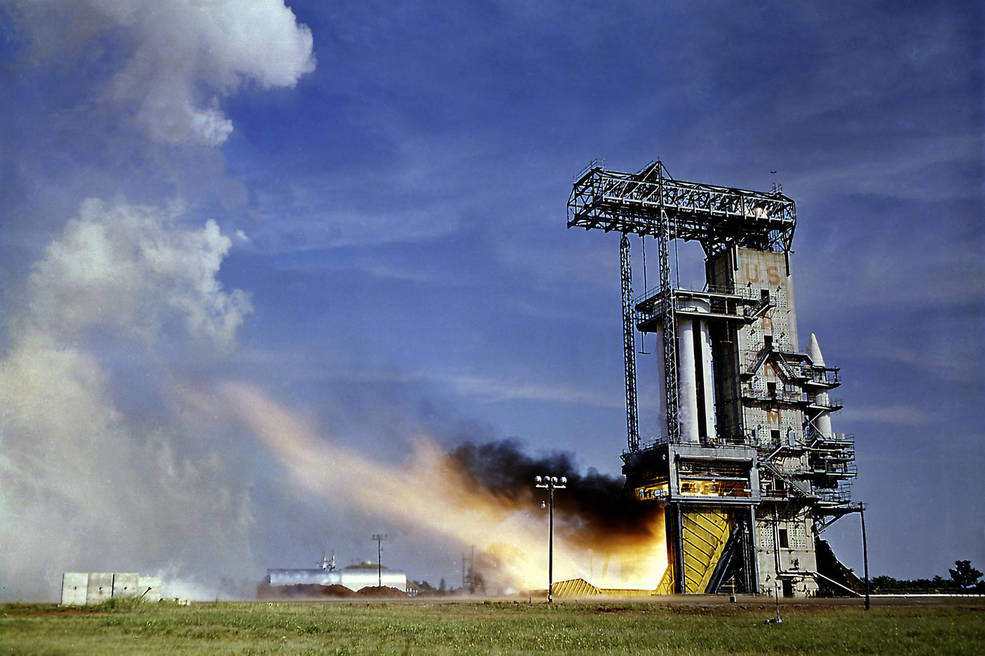
Huntsville didn’t become the Rocket City when NASA showed up.
By the mid-1950s—before NASA even existed—the city was already calling itself Rocket City, U.S.A. Local civic groups were selling the name on postcards while the Army tested missiles just outside town.
NASA would make the nickname famous. Apollo would make it permanent. But the story started earlier, with a small Southern city, a nearly abandoned wartime arsenal, and a military program built for the Cold War rather than the Moon.
The rockets changed Huntsville’s reputation. They also changed who lived here, how people made a living, what the city taught, what it built, and what the rest of the country expected it to accomplish.
That’s how Huntsville became the Rocket City.
BEFORE THE ROCKETS
Huntsville entered the 1940s as a small regional city shaped by cotton, textiles, agriculture, and commerce.
Its history went back much further. Huntsville hosted Alabama’s constitutional convention in 1819 and briefly served as the new state’s capital. Its early wealth grew from a cotton economy inseparable from plantation slavery. Cotton mills, railroads, nurseries, and other industries arrived later, but Huntsville was still known primarily as a Southern market town.
In 1940, the city had 13,050 residents.
That number gives us the scale of what came next. Huntsville wasn’t a major industrial city that happened to land a NASA facility. It was a modest city whose direction was about to be changed by federal decisions made during World War II and the Cold War.
The first big change had nothing to do with exploring space.
It had to do with munitions.
THE ARSENAL THAT ALMOST DISAPPEARED
In 1941, the Army established Huntsville Arsenal and Redstone Ordnance Plant southwest of the city.
The adjoining installations manufactured chemical and conventional munitions during World War II. According to the Army’s historical records, Huntsville Arsenal produced more than 27 million chemical-munitions items, including smoke devices, incendiaries, and chemical agents.
Then the war ended.
Production stopped. Workforces shrank. Redstone went into standby status in 1947, while Huntsville Arsenal was declared excess. By 1949, part of the complex was being advertised for sale.
That’s the hinge in the whole Rocket City story: the infrastructure that almost became surplus became its foundation.
The Army had rocket research spread among several locations and wanted to consolidate it. Redstone had land, industrial buildings, transportation access, test space, and plenty of room to expand. In October 1948, the Army designated it as a center for rocket research and development. Redstone was reactivated as the Ordnance Rocket Center in June 1949.
Later that year, the Army approved moving its rocket office from Fort Bliss, Texas, to Huntsville. The transfer began arriving in April 1950.
An arsenal that had nearly outlived its purpose suddenly had a new one.
The missile era at Redstone had begun.
THE COMPLICATED TEAM THAT CAME TO HUNTSVILLE
Among the people transferred from Fort Bliss were Wernher von Braun and approximately 120 German rocket specialists.
Their arrival is often packaged as a clean origin story: brilliant scientists came to Alabama, built rockets, and eventually helped put Americans on the Moon. The technical achievement is real. The clean version isn’t.
Von Braun had been technical director of Nazi Germany’s rocket center at Peenemünde. He was a member of the Nazi Party and an SS officer. His team developed the A-4, better known as the V-2, which Nazi Germany fired against European cities.
After an Allied bombing raid damaged Peenemünde, V-2 production moved underground to the Mittelwerk complex. Concentration-camp prisoners supplied forced labor under murderous conditions. Smithsonian historians estimate that at least 10,000 prisoner deaths were attributable to V-2 production at Mittelwerk. They also report that von Braun knew about the exploitation of camp labor and became increasingly involved in its management.
After the war, the United States recruited German specialists through Operation Paperclip. Their records were often minimized or obscured because American officials wanted their expertise—and did not want the Soviet Union to get it first.
That history cannot be cut out of Huntsville’s rocket story. It also shouldn’t be flattened into the claim that every German specialist carried the same responsibility.
And the Germans were never the entire American rocket program. Army personnel, American engineers, contractors, universities, the Jet Propulsion Laboratory, and thousands of later recruits did essential work. The German team brought significant experience with large liquid-fueled rockets, but they entered a much larger military and technical system.
Their assignment in Huntsville wasn’t initially to reach the Moon.
It was to build missiles.
MISSILES FIRST, SPACE LATER
The Cold War gave Redstone its mission.
In 1951, the Army assigned the Huntsville organization responsibility for developing what became the Redstone missile. It was a liquid-fueled, short-range ballistic missile designed to carry conventional or nuclear warheads.
The Army officially gave it the Redstone name in 1952. Later designs extended its technology into a family of increasingly capable vehicles.
Jupiter was developed as a longer-range ballistic missile. Jupiter-C was a modified Redstone-family vehicle used for high-speed testing. The Army Ballistic Missile Agency, established at Redstone in 1956, brought missile-development work under a major new organization.
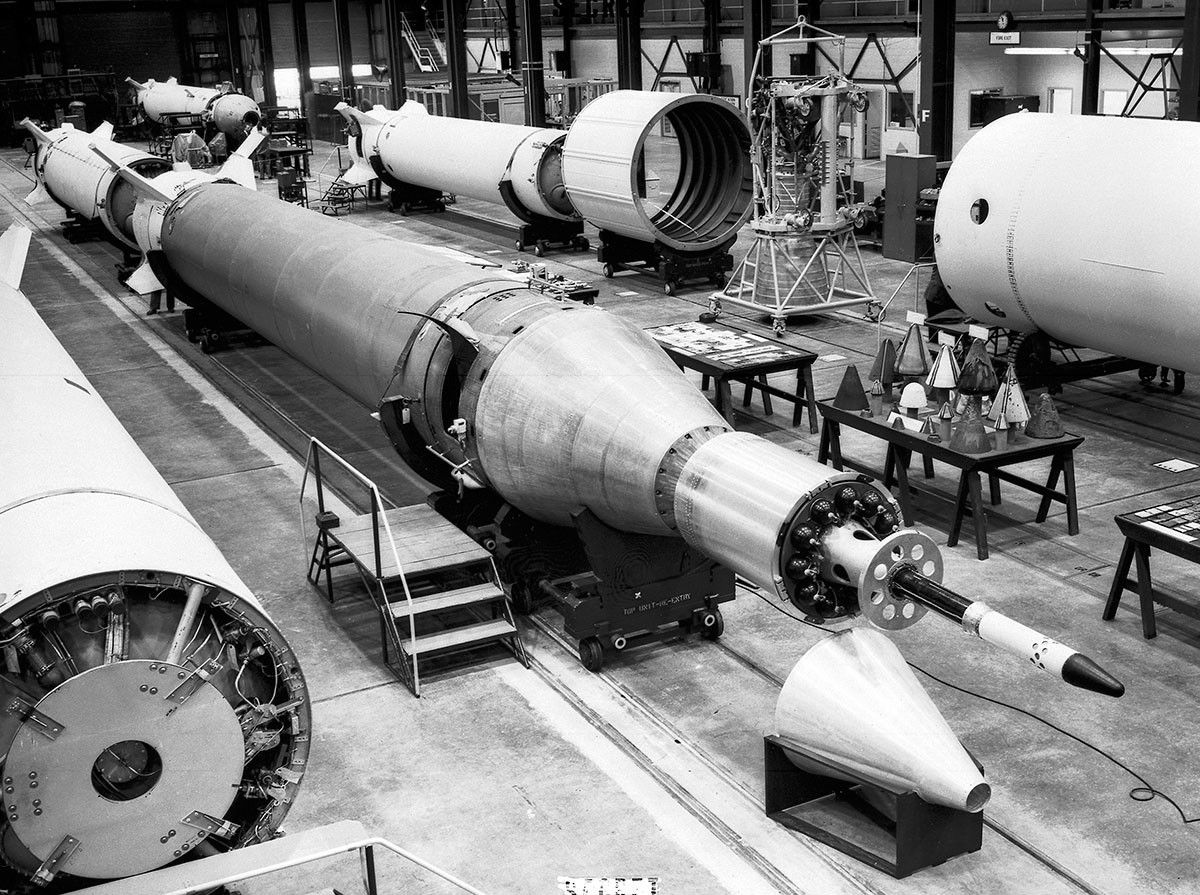
The names can become alphabet soup pretty quickly, so the useful version goes like this:
Redstone established Huntsville’s missile capability. Jupiter pushed that capability farther. Jupiter-C demonstrated that a Redstone-derived vehicle could reach the speed and altitude needed for something other than delivering a weapon.
That possibility became urgent in October 1957, when the Soviet Union launched Sputnik.
THE NIGHT HUNTSVILLE ENTERED THE SPACE AGE
Sputnik didn’t simply place a satellite in orbit. It shattered American assumptions about technological superiority.
The pressure grew when Sputnik 2 followed. Then, on December 6, 1957, the United States’ Vanguard rocket rose only a few feet before falling back and exploding on live television.
The Army and the Jet Propulsion Laboratory got their opportunity.
The Huntsville team prepared a satellite-launch configuration derived from Jupiter-C and designated Juno I. JPL built and operated the satellite. Physicist James Van Allen’s University of Iowa team supplied its main scientific instrument.
At 10:48 p.m. Eastern time on January 31, 1958, Juno I lifted off from Cape Canaveral carrying Explorer 1.
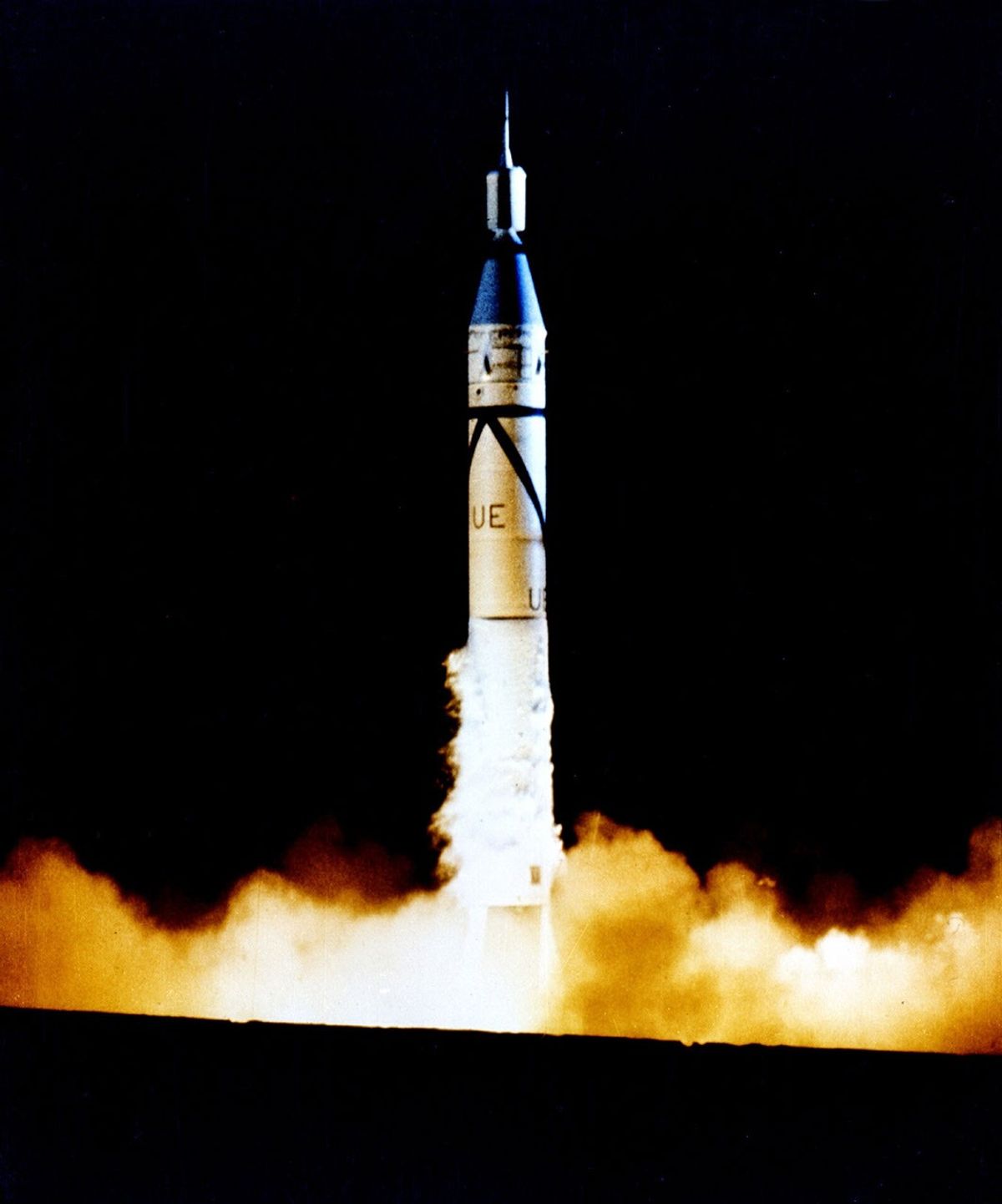
It worked.
Explorer 1 became the first American satellite. Its scientific instrument produced evidence of the radiation regions now called the Van Allen belts. The mission gave the country an answer to Sputnik and produced a genuine scientific discovery at the same time.
For Huntsville, it was the moment the work happening behind Redstone’s gates became part of a national story.
There’s one detail worth holding onto: Explorer 1 launched before NASA began operations. It was an Army, JPL, and University of Iowa achievement.
Huntsville entered the Space Age through its missile program.
NASA came next.
FROM ARMY POST TO NASA CENTER
President Dwight Eisenhower signed the National Aeronautics and Space Act on July 29, 1958. NASA officially began operations on October 1.
The new civilian agency absorbed the older National Advisory Committee for Aeronautics and gradually incorporated other federal space organizations. Huntsville’s Army team, facilities, and launch-vehicle work became central to that process.
The transfer happened in stages. The Saturn program moved under NASA in March 1960. On July 1, Marshall Space Flight Center formally began operations at Redstone Arsenal. It was named for George C. Marshall, the World War II Army chief of staff who later served as secretary of state and helped shape the European Recovery Program.
Von Braun became Marshall’s first director.
NASA didn’t arrive in an empty field and invent Huntsville’s rocket program. It inherited an established Army organization with people, facilities, contractors, test stands, and years of missile-development experience.
What changed was the mission.
The same concentration of engineering talent that had been developing military missiles was now being directed toward civilian launch vehicles large enough to carry people beyond Earth orbit.
Which brings us to the hometown version of the Saturn V story.
WHAT HUNTSVILLE ACTUALLY DID FOR APOLLO
“Huntsville built the Saturn V” sounds great on a T-shirt.
As history, it needs an asterisk.
The accurate version is better anyway.
Marshall developed and managed the integrated Saturn launch-vehicle program. Its engineers performed design, systems integration, propulsion development, structural work, testing, evaluation, and technical oversight.
But Saturn V was a national undertaking.
Boeing, North American Aviation, Douglas Aircraft, IBM, Rocketdyne, and many other contractors produced major stages, engines, and instrumentation. Hardware was manufactured around the country. NASA’s Michoud Assembly Facility near New Orleans produced large stages. Kennedy Space Center assembled and launched the flight vehicles. Johnson Space Center handled the spacecraft, astronauts, and mission control.
Marshall’s job was to make all those distributed pieces function as one launch vehicle.
That is a much bigger claim than saying Huntsville bolted the whole thing together in one giant shed.
The center developed Saturn I and Saturn IB before managing the much larger Saturn V. Marshall’s test facilities subjected engines, components, stages, and integrated systems to the forces they would face in flight. Engineers worked through combustion instability, vibration, structural loads, propellant behavior, guidance, and the general inconvenience of controlling a 363-foot machine powerful enough to leave Earth.
On November 9, 1967, the first Saturn V flew on Apollo 4. Less than two years later, another lifted Apollo 11 from Kennedy Space Center.
That’s Huntsville’s factual connection to the first Moon landing. Marshall didn’t design the lunar module or fly the mission from Houston. It developed and managed the launch vehicle that sent the Apollo spacecraft and crew toward the Moon.
Four days after launch, Neil Armstrong and Buzz Aldrin stepped onto the lunar surface while Michael Collins remained in orbit.
Around here, we put it a little differently:
BECAUSE NORMAL NEVER MADE IT TO THE MOON.
That’s KHS commentary, not historical evidence. The actual history doesn’t need much help.
HOW ROCKETS CHANGED THE CITY
The launch vehicles left Huntsville. Their effects stayed.
In 1940, Huntsville had 13,050 residents. By 1950, it had 16,437. Then things got weird.
1960: 72,365.
1970: 139,282.
City boundaries changed during those decades, and annexation contributed to those numbers, so it would be wrong to hand all of that growth to Redstone or NASA. But the scale of the change is impossible to miss.
Scientists, engineers, Army personnel, contractors, technicians, military families, and international newcomers moved into the area. Housing spread. Roads, schools, utilities, and commercial districts followed. Aerospace and defense firms opened offices near the federal installations.
The demand for technical education changed local institutions too.
The University of Alabama Huntsville Center began offering classes in January 1950 with 137 students. As Redstone and Marshall grew, so did the need for advanced engineering and science programs. Von Braun and other civic leaders pushed Alabama lawmakers to support a research institute. UAH became an autonomous university in 1969.
Cummings Research Park developed beside the university as a base for aerospace, defense, and technology companies. Federal research, higher education, and private contractors were now sitting close enough to borrow talent, ideas, and probably a few parking spaces from one another.
That arrangement became one of the foundations of Huntsville’s economy.
The cultural consequences are harder to measure than population, but they’re hard to miss. That broader story is also about the people who shaped Huntsville beyond the launch vehicles; The People Who Made Huntsville Different follows some of those scientists, organizers, educators, preservationists, engineers and artists.
Huntsville remained Southern, but it was increasingly filled with people who had arrived from somewhere else to work on highly technical national projects. Scientists joined civic organizations. Engineers taught courses. International families entered local schools and churches. Research facilities, museums, technical societies, and educational programs grew with the population.
That growth didn’t happen outside the rest of Alabama’s history. Huntsville’s rise as a center of science and engineering took place in a segregated state, and the prosperity created by federal investment was not experienced equally across the community. Rocket history and civil-rights history happened in the same city, during the same decades.
In March 1970, the U.S. Space & Rocket Center opened, giving the public access to a history that otherwise existed largely behind Redstone’s gates. Space Camp followed in 1982 and turned Huntsville’s engineering identity into an experience shared by students from around the world. For the present-day side of that story—and some places beyond the obvious Rocket City stops—see Unusual Things to Do Around Huntsville.
By then, Rocket City wasn’t simply a promotional nickname.
It was part of the city’s machinery.
WHY ROCKET CITY STILL FITS
Apollo ended. Huntsville’s space work didn’t.
Marshall managed the development of Skylab, America’s first space station. Its engineers helped develop major Space Shuttle propulsion systems, including the main engines, solid rocket boosters, and external tank. Marshall managed Spacelab, contributed hardware and research facilities to the International Space Station, and continues coordinating ISS science through its Payload Operations Integration Center.
The center also led or supported projects including the Hubble Space Telescope, Chandra X-ray Observatory, and numerous Earth and planetary science missions.
Today, Marshall houses the Space Launch System Program Office and manages NASA’s Human Landing System program. Redstone Arsenal remains a major center for Army aviation, missile defense, space, logistics, and federal technology. Contractors, research institutions, manufacturers, and universities still cluster around that work.
Huntsville is a very different place now. Bigger. Busier. A hell of a lot more traffic.
It also has manufacturing, biotechnology, software, healthcare, arts, music, independent businesses, and neighborhoods with identities that can’t be reduced to rockets.
But the basic habit is still here: somebody shows up with a project that sounds slightly ridiculous, and a bunch of engineers start figuring out how to make it work.
Rocket City isn’t a nickname trapped in Huntsville’s past. It describes what happened when a small Southern city became a place expected to solve problems with national consequences.
The rockets were only part of what Huntsville became.
The habit of taking on the improbable never completely went away.
Explore more: Rocket City Field Notes collects more Huntsville history, culture, people and local guides.
SOURCES & FURTHER READING
- NASA — Marshall Space Flight Center History
- NASA — Marshall at 65: The Foundational 1960s
- NASA — Story of Explorer 1
- NASA Science — Explorer 1
- NASA — Marshall Space Flight Center Fact Sheet
- U.S. Army — Redstone Arsenal, 1950–1952
- U.S. Army — Redstone Missile History
- U.S. Census Bureau — 1950 Population Census
- Smithsonian — Project Paperclip and American Rocketry
- Smithsonian — “Wonder Weapons” and Slave Labor
- United States Holocaust Memorial Museum — Mittelbau
- UAH — University History